Attic & Crawlspace Mold Removal in Keller, TX
Attics and crawlspaces are where Keller's mold hides longest. Nobody goes up there — until the musty smell drifts down through the vents, or a roofer spots blackened sheathing during a replacement quote. Texas attics are brutal environments: 140-plus degrees in summer, roof leaks from spring hail, and bathroom exhaust fans that were never vented to the outside, pumping warm moist air straight onto roof decking every winter morning. It's a mold incubator with a roof over it.
Crawlspaces have the opposite problem: ground moisture, poor drainage, and North Texas clay that holds water against the foundation. Vapor rises, condenses on floor joists and subflooring, and feeds growth nobody sees for years. By the time there's a smell in the living space, the problem is established.
Your provider treats these spaces as their own discipline: proper access and lighting, containment that protects the living space below, and — critically — fixing the moisture driver. Cleaning attic mold without fixing the bath fan venting or the roof leak is a recurring appointment, not a solution.
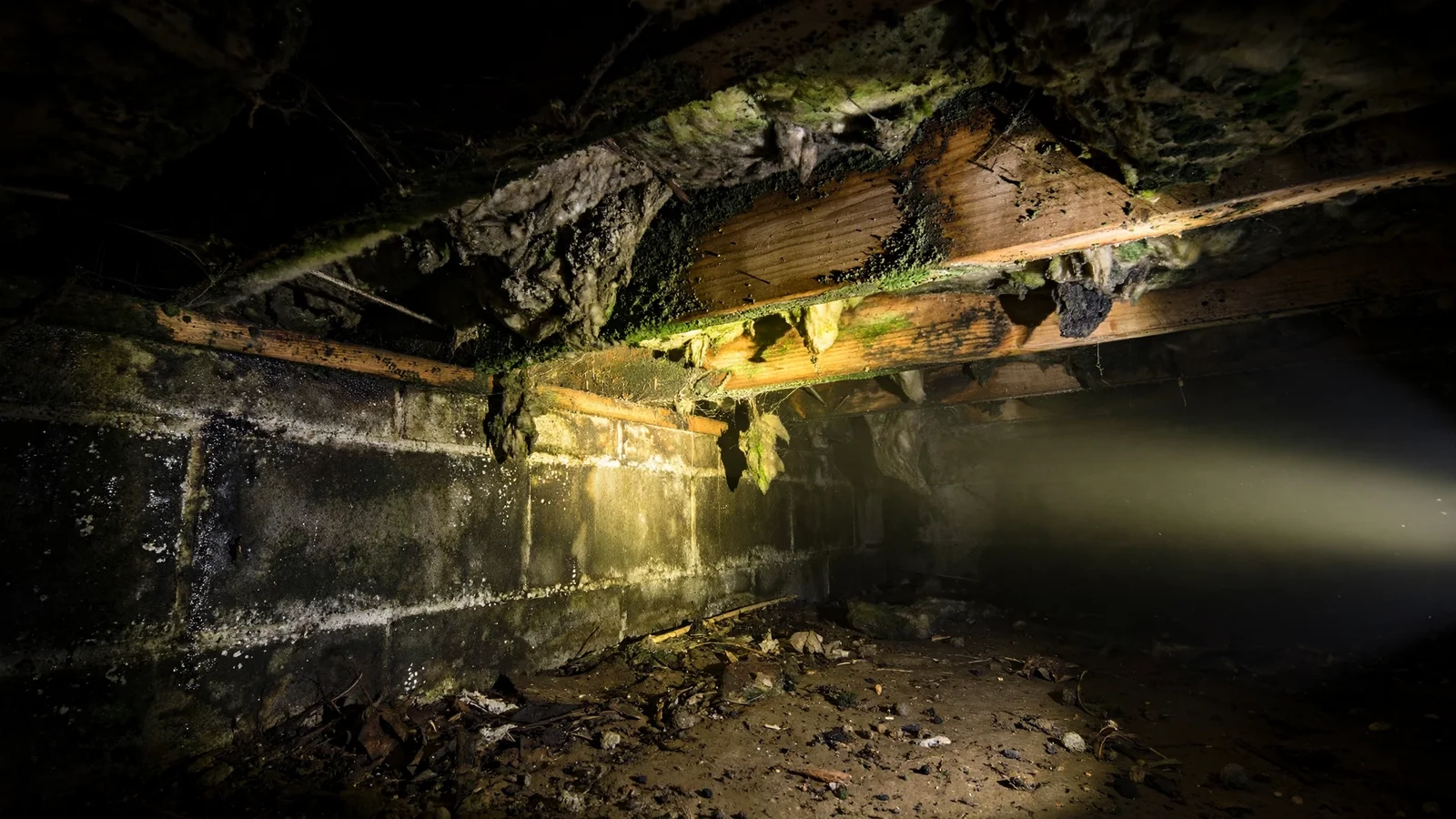
Signs of attic or crawlspace mold
- Dark staining or fuzzy growth on roof sheathing or rafters
- A musty smell when the AC runs — the air handler may sit in the affected space
- Bathroom exhaust fans that vent into the attic instead of outside
- Sagging, damp, or discolored insulation
- Damp soil, standing water, or a musty odor in the crawlspace
- Frost or condensation on the underside of the roof deck in winter
How your provider handles attic and crawlspace mold
1. Access and assessment
Your provider gets proper lighting and access into the space — attic hatch or crawlspace entry — and maps the growth and the moisture: roof deck, insulation, joists, ductwork. Photos document everything, so you see what they see without climbing up yourself.
2. Protect the living space
Containment goes up at the access point and any openings into the home, with filtered negative air. Attic and crawlspace work stirs up decades of dust and spores; your provider keeps all of it out of the rooms you live in.
3. Remove and clean
Moldy insulation usually comes out — it's porous and rarely worth saving. Sheathing and joists get HEPA-vacuumed and treated; the approach depends on how deep the growth runs, and your provider will explain the call before making it.
4. Fix the moisture driver
The step that makes it last: bath fans vented properly to the exterior, the roof leak repaired, crawlspace drainage and vapor control addressed, attic ventilation checked. Your provider tells you what the space needs so the mold doesn't return.
Attics and crawlspaces in Keller homes
Keller's rooflines tell the story: complex multi-gable roofs from the 1990s and 2000s build waves, with valleys that collect debris and flashing details that fail in hail season. Many of these homes vented bathroom fans straight into the attic — code caught up later, but the houses didn't. Attic air handlers add condensate risk above bedroom ceilings. Crawlspaces are less common than slabs in Keller, but where they exist, the expansive clay and flat grading keep them damp. Local mold pros know these houses: they check the bath fan terminations, the valley flashing, and the grading before they declare the job done. Shade changes the attic picture in Keller's wooded pockets, including Shady Oaks and Stonebridge: dense oak canopy and leaf litter in roof valleys keep sections of decking damp longer after rain, while sun-baked sections dry quickly, so growth can be patchy rather than uniform. Sweating ductwork adds summer moisture overhead — cold supply ducts crossing a humid attic condense on their outer surfaces and drip onto insulation below. Your provider maps both patterns before deciding what insulation comes out.
Need attic & crawlspace mold removal in Keller?
One call connects you with a local technician. No forms.
(555) 234-5678📞 Call Now