Mold Inspection & Testing in Keller, TX
That musty smell when the AC kicks on, a stain spreading across the ceiling, spots that keep coming back no matter how many times you wipe them down — these are the moments a mold inspection earns its keep. Most mold problems in Keller homes start out of sight: behind drywall from a slow plumbing leak, under attic insulation after a roof leak, inside a wall cavity fed by a sweating AC line. An inspection finds what eyes alone can't — mapping moisture through the home, tracing it back to the source, and laying out exactly what needs to happen next.
Your provider's inspection starts with the visible and works backward: every water stain, every warped baseboard, every room with that telltale odor. Then comes moisture mapping — meters and thermal imaging that show where water has traveled inside walls and under floors, not just where it surfaced. The point isn't to find mold everywhere; it's to define the real boundary of the problem so the remediation plan matches the actual damage, not a guess.
Testing has its place: air or surface samples, sent to an independent lab, can confirm what type of mold is present and whether indoor spore levels are elevated compared to outdoor air. But testing without inspection is backwards — a sample tells you what's in the air, not where the moisture is coming from. Ask your provider what their inspection covers before they start, and what they'll hand you at the end: you should get a clear, written scope of the problem, not a vague verbal summary.
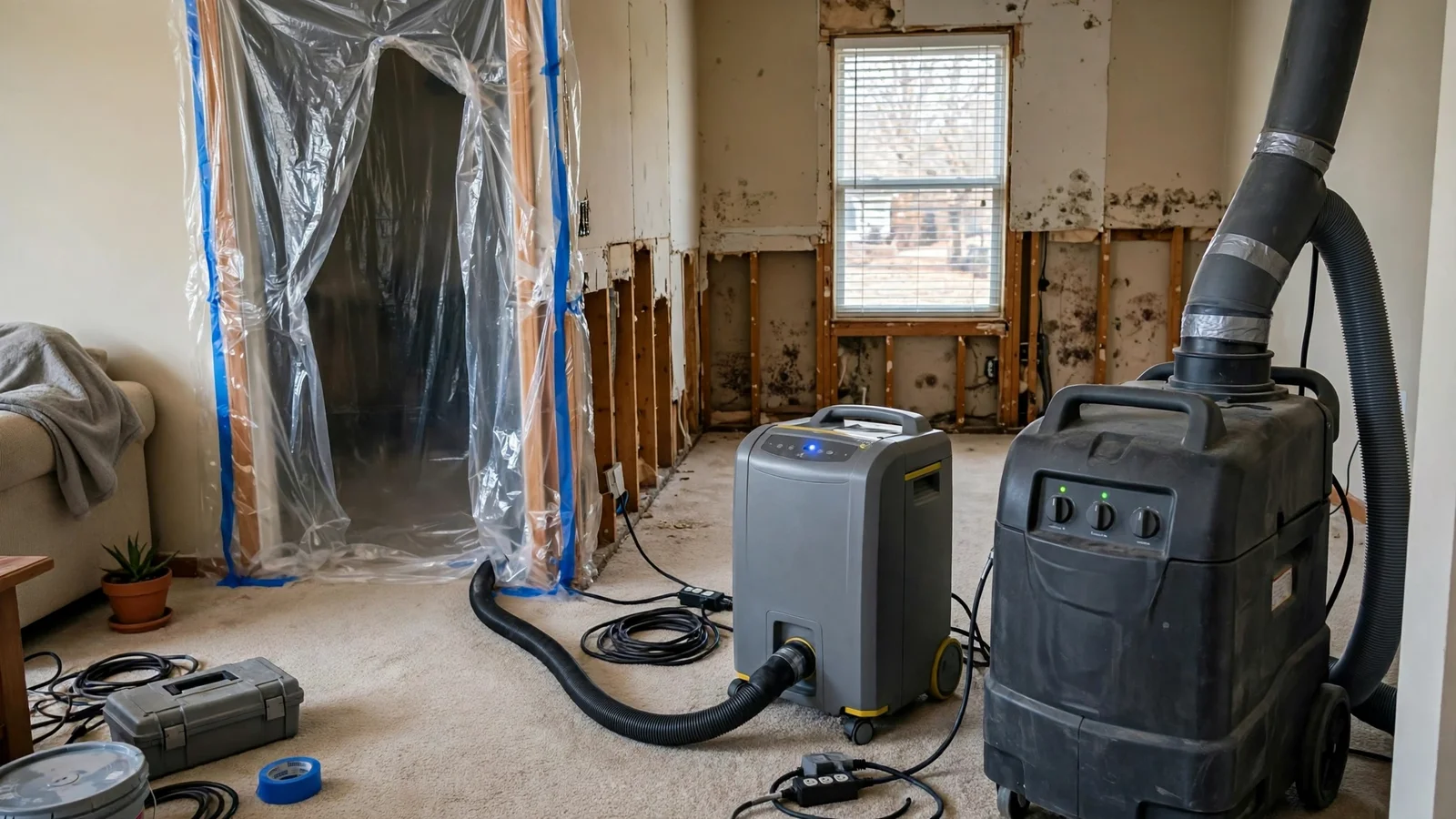
Signs you need a mold inspection
- A musty or earthy odor with no visible source — the classic sign of hidden growth
- Visible spots that return after cleaning — the moisture source is still active
- Any recent water event: roof leak, burst pipe, appliance hose failure, AC overflow
- Peeling paint, bubbling drywall, or warped baseboards — moisture behind the surface
- A condensate drain or AC pan that has overflowed or backed up
- Allergy-type symptoms indoors that ease when you leave the house
What the inspection covers
1. Walkthrough and moisture mapping
Your provider walks the home room by room — attic to slab — checking every stain, odor, and suspect area, then maps moisture with meters and thermal imaging to find where water traveled inside walls and under floors.
2. Source identification
Finding the mold matters less than finding the water. Your provider traces the moisture back to its source — the failed supply line, the clogged condensate drain, the roof penetration — because remediation without a fixed source is temporary.
3. Sampling when it adds answers
When the type of mold or the extent of spread is unclear, your provider can take air or surface samples for analysis at an independent lab. Sampling supports the scope; it doesn't replace the inspection.
4. A written scope, not a sales pitch
You get a clear written summary: where the moisture is, what's affected, and what remediation involves. If the inspection finds nothing, they tell you that too — and what to watch for going forward.
Mold inspections in Keller homes
Keller's housing stock writes the script for most inspections here: two-story brick homes on slab foundations, built from the 1980s onward, sitting on expansive North Texas clay that shifts with the seasons and stresses slab plumbing. Air handlers live in hot attics, and their condensate lines clog — pan overflows are one of the most common hidden-mold sources local pros find. Spring hail and wind tear at roofs, and the resulting leaks feed attic mold long before anyone notices a ceiling stain. Local mold pros know these patterns, which means they check the places Keller homes actually fail: attic pans and drains, slab-adjacent plumbing walls, and roof-deck undersides after storm season. Timing shapes the inspection, too: after a hard freeze, your provider looks for split attic supply lines that only began leaking at thaw, and after spring storms the inspection traces wind-driven rain past lifted shingles and valley flashing. Your provider also notes quieter clues — sprinkler heads soaking the same foundation edge daily, and mature oaks pulling moisture from one side of the slab — because uneven soil moisture points toward the walls most likely to hide growth.
Need mold inspection & testing in Keller?
One call connects you with a local technician. No forms.
(555) 234-5678📞 Call Now