Black Mold Removal in Keller, TX
"Black mold" is the name that gets everyone's attention — and it deserves a careful answer, not a scary one. The mold people usually mean is Stachybotrys, a dark greenish-black mold that grows on chronically wet cellulose: the paper backing of drywall, ceiling tiles, wood. It needs sustained moisture to thrive, which means where there's black mold, there's a water problem that has been going on for a while. Color alone can't identify the species, though — only lab analysis of a sample can do that.
Here's what matters more than the species: the growth is on your building materials, it's spreading because moisture keeps feeding it, and disturbing it without containment spreads spores through the house. That's why your provider treats black mold removal as a controlled job, not a cleaning job — the affected area gets sealed off, the air gets filtered, contaminated porous material comes out, and the moisture source gets fixed. Skipping any of those steps is how mold removals fail.
One more honest note: no reputable provider identifies mold by looking at a photo, and no one should scope a remediation without seeing the site and the moisture behind it. If someone does, that's your sign to call someone else.
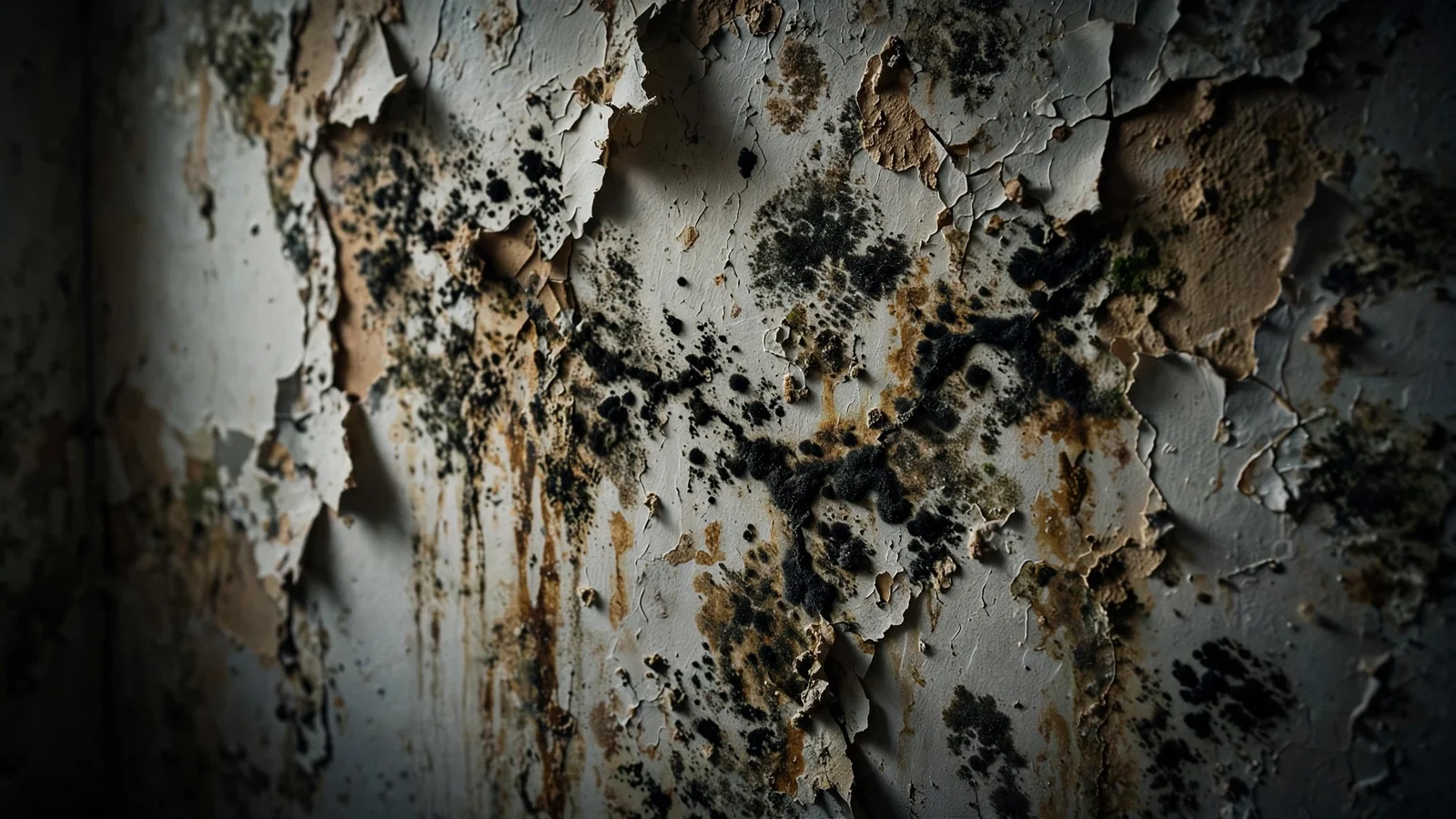
Signs of black mold in your home
- Dark green-black, slimy-looking growth on damp drywall, baseboards, or ceiling tiles
- A strong musty odor concentrated in one room or closet
- Growth that returns in the same spot after you cleaned it
- Warped baseboards or bubbling paint near plumbing walls
- A known long-term leak in that area — the slow drip under a sink, the old shower pan
How your provider removes black mold
1. Containment first
Your provider seals the work area with plastic sheeting and runs filtered negative air so spores don't travel into the rest of the house during the work. This is the step that separates professional remediation from a DIY wipe-down.
2. Remove what can't be saved
Porous materials with established growth — drywall, insulation, carpet pad — come out. They can't be cleaned; the growth runs through the material. Your provider cuts back to clean, dry material with a margin.
3. Clean what can be saved
Non-porous surfaces — studs, concrete, metal — get HEPA-vacuumed and treated with antimicrobial solutions, then dried. Every surface in the contained area gets the treatment, not just the visibly stained spots.
4. Dry, verify, fix the source
Your provider dries the area and verifies with moisture readings before considering the job done — and addresses the water source that fed the growth, because without that fix, everything else is temporary.
Black mold in Keller homes
The black mold calls in Keller follow the local moisture script. Slow plumbing leaks inside walls — the supply line to a bathroom, the ice-maker line behind the fridge — wet drywall for months before anyone sees a spot. Shower pans and tub surrounds from the 1990s build boom fail quietly. AC condensate overflows soak closet ceilings where the air handler sits above. And slab foundations on shifting clay crack supply lines under the floor, feeding wall cavities from below. Local mold pros see these exact sources on repeat, which is why their first question is always about the water, not the mold. Larger Keller floor plans add another pattern: guest bathrooms and upstairs showers that sit unused for weeks can hide slow trap and supply leaks until the paper backing of the drywall is chronically wet — the exact food black mold needs. Pool-adjacent powder rooms and laundry sinks see the same cycle of splash, humidity, and closed doors. Your provider checks those low-use wet rooms first, because growth there often signals a longer, quieter leak than the stain suggests.
Need black mold removal in Keller?
One call connects you with a local technician. No forms.
(555) 234-5678📞 Call Now